BUILDING THE ULTIMATE SOCCER PLAYER

Since 2014, I have been working with male and female soccer players (11 to 21 years old) to figure out what type of training best allows them to perform on the field.
Athletes who train make gains in fitness, power and strength. When they only invest in one season-a-year training programs, athletes often lose the gains made in their prior training season and have to begin again at square one.
Soccer, as a sport, has yet to figure out how to incorporate strength and conditioning into its calendar year as well as some other sports. One sport that has made a huge shift in how it views strength training is baseball. Until recently, strength and conditioning was still seen as a potential detriment rather than enhancement. If you look at the work of people like Eric Cressey, who has been working with the best baseball pitchers in the major leagues, you’ll see how much lifting plays a part in their success.
Football is the first sport we think of when it comes to sports that have mandatory training outside of their practices. In most cases the biggest, fastest guys or girls are almost always the best players. In football, the traditional metrics are squat, bench, power clean and the 40yd sprint.
Soccer isn’t like football or baseball in sport demands or athlete body type.
For our soccer metrics, we wouldn’t use any of those. If we trained our soccer athletes to be like football or baseball players, they would develop stiffness that would decrease their agility. Agility is essential on the field. I have seen soccer players who go too heavy in big bilateral lifts, and then end up paying for it with low back pain or loss of multi-planar quickness. Lifting heavy is great for putting on weight and building some maximal strength numbers, but does not serve the whole package.

What makes a great soccer player?
Not there yet? Want to get better? Check out the Fall Schedule or contact coach for details.
First and foremost we need to be fit, as indicated by speed, stamina and the ability to recover quickly.
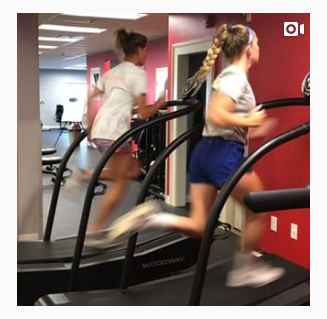
-10 sec Woodway sprint for maximal speed
-300 yd x 2 shuttle with 3 or 5 min recovery between sets
-1 mile run test
Next we need power.
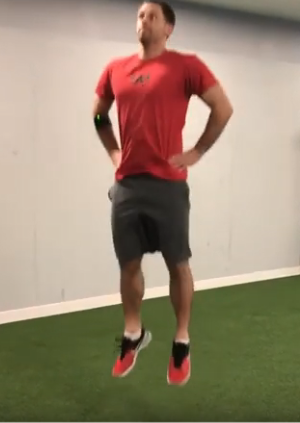
-Vertical jump
-Seated med ball chest pass
-Supine curl up throw
These 3 metrics should all correlate to each other in that the numbers of inches you jump should equal the number of feet you can throw the ball in the upper body/trunk power tests.
Finally, we need a baseline of strength.
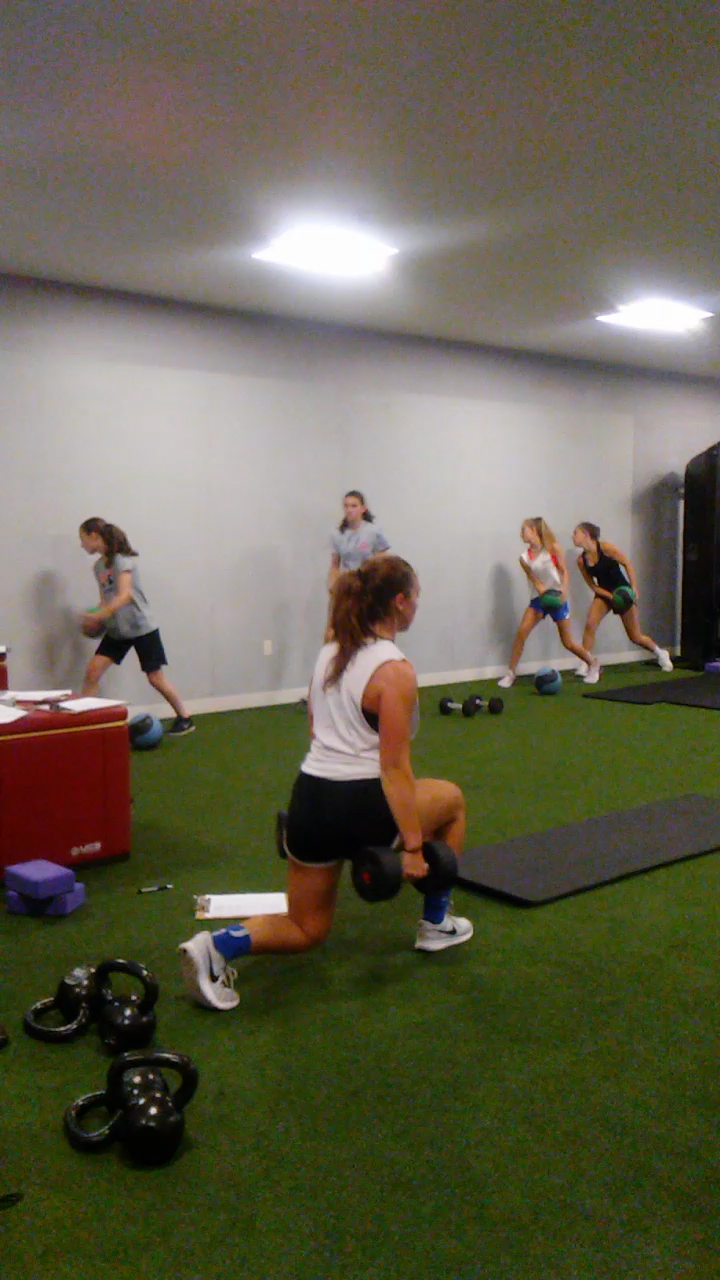
-Split squat for 8 reps
-Split stance row for 8 reps
-Split stance press for 8 reps
We find that the split squat has a low learning curve and is a better way to train for soccer. Split stance cable rows and presses measure upper body strength and also challenge the anti-rotational components of the trunk which is crucial for kicking.
Adding in Hip/Low Back Care Protocols
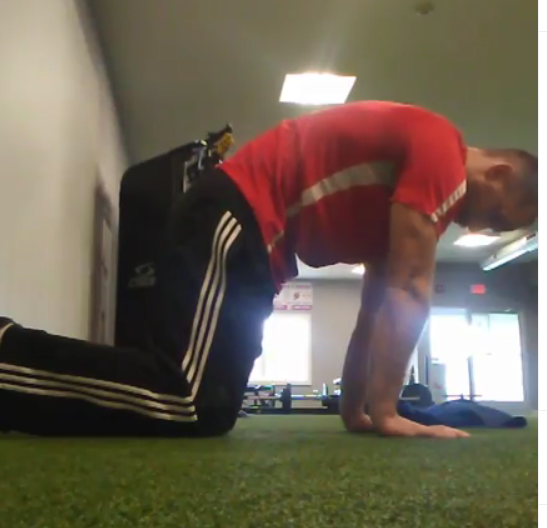
Soccer players need to spend a lot more time doing hip/low back care programs. Baseball players are constantly doing arm care work to preserve their shoulders for throwing. In that same vein, our soccer athletes need to spend more time strengthening hips and preventing their low back from taking over.
Knee and lower back issues are the most common injuries we see and are often connected to poor pelvic control. Incorporating targeted strategies to address the hips and low back go a long way in managing the amount of wear and tear you accumulate playing soccer.
These guidelines are the backbone of our new, full year, soccer conditioning program which takes into account all of these metrics and works on specific areas during certain phases of the year. Whether you are in the middle of your season or starting the post-summer off-season, we have a plan that will keep you fit and healthy all year round.

Leave a comment

search previous next tag category expand menu location phone mail time cart zoom edit close