
This is a topic that most coaches rarely utilize to their advantage. “ The concept (of lowest system load) doesn’t say use light things; it says use the lightest implement possible to accomplish what you want to accomplish.”
In his article, Charlie Weingroff, goes into great detail as to why this system has really smart applications when it comes to training. For example, a 200lb person swings a 24kg Kettle and produces roughly a 4x bodyweight (800lbs) force into the ground. http://scienceoftheswing.blogspot.com/
Producing high, ground contact force allows for faster sprinting and change of direction. Weingroff poses the question, does it make sense to force someone to deadlift (800lbs) to yield the same results? Clear answer here is no. There are many costs to being ruthlessly strong. Some of them do not carry over very well to athletics. You have to become extremely “stiff” in order to handle super heavy loads. For an explosive athlete like a soccer or basketball player, this can cause all sorts of issues. So wouldn’t it be smarter to still be able to get the same force production into the ground without having to put the body(system) under such a heavy load?
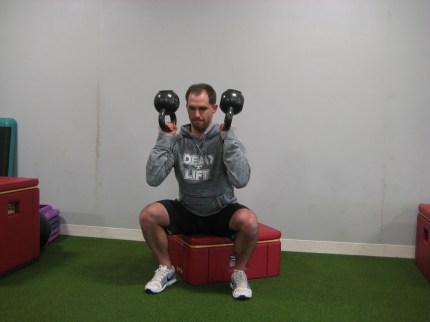
When athletes are training for 4 months in a row, it’s not smart coaching to be loading them up every phase because it will come at a cost. Two of my favorite strategies are to have athletes use either movement patterns that they never experience in sport, or different tools for the same exercise. Charlie talks about using Kettlebells for overhead pressing, bottoms up squats(see picture) or loaded carries. For athletes like basketball or soccer players, once they have done a phase of agility and running drills, we move them onto the rower. This is a reality check because they are widely inefficient at it. Because they are efficient runners, it takes a few rounds of shuttle runs to get their HR where we want it. This same HR is now achieved in 250 meters of rowing. Simply keeping up with energy production in this pattern is the new challenge. In the kettlebell swing, the velocity changes with a lighter load which increases force production. In the rowing example, we’re able to tap into the same energy system adaptation, but with less work because we are less efficient with the movement.
Both are examples of doing the least amount of work to produce the same adaptation.
Most athletes want to get better day 1. Their mindset is often, “if I don’t go all out, how will I become the best?”. For an athlete competing in a specific event that might be true, but for a 14yr old that is just starting to learn how to train, what is the cost of continually using high loads over the next 4-8yrs? What is the loss of performance or skill acquisition because an athlete is too gassed? Why not use the lowest system load approach that will allow them to still progress but not crush them in the process? Ask any one of our athletes how they feel after a heavy deadlifting day, and most will say they could go for a nap. If our goal is to have them train, practice or compete again, then using a program that allows for us to develop athletic qualities without the depletion is key.
 TS Training Systems