Often times when I chat with coaches or parents they tend to have an idea as to what training should look like. Most of the time they are looking for something that will be a catchall. Eric’s article makes a convincing point that strength can be the tide that raises all ships. He also points out that most people will gravitate towards what they like as opposed to what they need.
Crossfit and Confirmation Bias Article by Eric Cressey
We have constantly evolved our training system around this last concept due to varying developmental ages and because most kids are on very different training levels. Some of our younger athletes lift for strength, but more often they are learning how to move fast and coordinate their limbs. They learn the strength patterns so that when they are at the beginning of puberty their hormonal changes can be utilized to develop strength more efficiently.
As for the older kids, it becomes a little bit more of a mixed bag. We are constantly managing what they need most. Sometimes an athlete presents with a speed deficit. This could mean they need more strength, better mechanics, or more power. To Eric’s point, that doesn’t mean that there is a random theme every week for them to work on. We still follow our system of progressions and regressions.
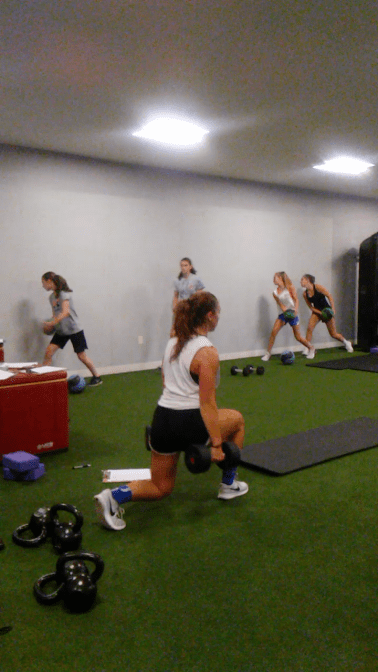
I think this is where most people overlook what it takes for athletes to really develop long term improvement. If you teach an athlete 20 different lifts over the course of a month and change them up every week, the chance of them retaining the program when they leave is very slim. Additionally, the structural adaptation will not be as great because the constant change in stimulus will mostly just be neurological efficiency.
With regard to mental toughness, you typically are not going to achieve it by forcing kids into high-intensity training sessions to see if they will push past their discomfort. This is very apparent with our middle and high school athletes. Eric’s article brings into light something that we often miss with younger athletes. Sometimes, what looks like “laziness” or “lack of mental fortitude”, is really a lack of necessary tools to succeed. If you are hoping to have someone crush a hard sprint day, but they lack the strength to repeatedly put force into the ground at a high output, then they will look and probably feel really slow. The result? The athlete will likely not want to continue.
If you notice, the kids who do have this “mental toughness” quality are also the ones that are just a little ahead of the curve. Whether it’s genetics, work ethic, or multi-sport experience, they are the athletes who are already pretty fit and have the drive to push themselves. Again, this is another confirmation bias, in that most athletes that do something like CrossFit, boot camps, or HIIT(high-intensity interval training) are already primed going into these for success.
If you develop a quality like strength in all of your athletes, you increase the chance that more athletes will be willing to push themselves harder now that the engine has more horsepower to do so. Your developmental age will dictate what foundational quality you need to work on the most. It may be strength, it may be coordination, or it could be a mix of everything in small doses. This is why it is really important for athletes to have an off-season to work on bringing up other qualities besides sports skills. At the SPC, we focus on these fundamentals and our athletes have the opportunity to gain what they need to better their own performance both physically and mentally.
 TS Training Systems