
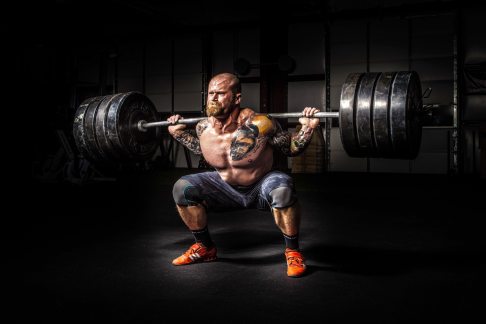
 In my experience, when it comes to the process of gaining or losing weight, neither is “fun”. The body just doesn’t like to make changes all that much.
Let’s start with what I myself have gone through over the years.
As a soccer player in high school, I was close to 140lbs, and in college I was 155lbs. That was also right around 7-9% body fat. I was average in high school my senior year but the “small scrawny kid” in college. This wasn’t hard to maintain because practicing 2hrs a day and having a body that functioned like a hormonal factory allowed for some nutrition choices that weren’t the best. As I got older and my energy expenditure slowed down, the story started to change. I started to lift more and adopted a powerlifting style training program. I went up to 175lbs and was closer to 10-12% body fat. I actually was a better athlete at 175lb than when I was in college. Adding the extra strength and muscle improved my performance in a men’s soccer league that was comprised of all former college athletes. At my heaviest, I have been 194lbs and 17% body fat. This had its advantages to lifting heavy weights but was not great for my clothes fitting well.
So what I have learned from my experiments in gaining and losing weight?
1) It is hard to gain muscle mass when you are playing a metabolically taxing sport.
2) It is very hard to lose weight on the modern American diet.
In fact, here is a current statistic:
The prevalence of obesity was 39.8% and affected about 93.3 million of US adults in 2015~2016 .- https://www.cdc.gov/obesity/data/adult.html
As many Americans know it can be very easy to find yourself eating way more calories than needed without even realizing it.
How does this factor into athletes or the general public reaching their goals for performance and aesthetics?
Gaining Muscle Mass
When we look at our athletes, especially those that are in sports like soccer or basketball, it can be a challenge to get them to put on muscle mass. If they are practicing 4x a week and have 1-2 games, that could equate to roughly 8-10 hrs of activity where their heart rate is often reaching 90% and above their max during those bouts of activity. For athletes, this can create a challenge when trying to put on lean muscle mass.
For some of our athletes, we are way more lenient on what they eat. We still want to build a meal around lean protein, fruits and veggies, but sometimes we will encourage some extra food to increase caloric intake to meet the demand of their sport.
You need to be in a caloric surplus to put on muscle. Which is why I went up to 194lbs. I ate 6 meals a day and added on 4% body fat. Even though that was my goal, it didn’t feel good. My joints hurt more often and most nights I went to bed with a stomach ache from eating all day( 6 meals a day). This was my cost. The gain was that my strength performance went up and certain measurements associated with muscle gain also increased. The main metric was I would be able to deadlift 300+ pounds easily, eventually reaching 375lb as a max.
The lesson-you can add some muscle while staying very lean but it is very, very hard to do.
Losing Fat
Even if you are active, it doesn’t give you license to eat whatever you want. That pattern will eventually catch up to you. Every adult knows one athlete that eats every junk food known to man and is still a bean pole. But a 16yr old adolescent’s physiological advantages will not always remain. One day they will stop playing their sport so intensely/hormone profile will change and if they still have the same eating habits the body will change its shape.
For me, I find losing the weight slightly easier than gaining it. This is mainly because after years of playing sport and remaining active, my body is more conditioned for this route and if I follow my hunger cues, the weight starts to come off. But it still isn’t a good time by any means. Imagine going from eating 6 meals a day and being able to add in heavy whipping cream and strawberry jams to super shakes to make them taste really good, to cutting out 2 meals and reducing your carbohydrate intake almost by half. The first time I got up to 192lbs from 172 in 2014 I did it in just about 2.5 months. That was a very fast gain and I was miserable after 3 weeks. I slowly started to reduce my food intake and it took me almost 6 months to see that I had added on roughly 4lbs of muscle and my new resting body weight was 176. This past year I went from 176lb to 194lb. It took me about 4.5 months to get up to 194 and now I am trying to get down to 180lb. This time I am working on a shorter timeline to lose the extra body fat and it is harder reducing the 2 meals and certain carbohydrates.
Weight training or conditioning is helpful for people trying to lose weight, but ultimately it will still come down to nutrition. Unless you have been training for 3 months consistently the chances that your exercise is going to be contributing to a large part of your weight loss is slim. (disclaimer-this doesn’t mean exercise is a waste but you will never be able to exercise your way out of a bad nutrition plan).
In both cases, it takes super consistent eating habits and time. In order to gain weight, I needed to have at least 2 weeks of 6 meals before I started to see a steady weight gain. Right now, I need to string at least 3-4 days together in order to see a weight drop, but a day of eating that isn’t in line with my plan can set me back. Something else to keep in mind is that most of these goals/experiments weren’t done over the course of 1-2 months. They took me the better part of a year to actually achieve them.
Bottom Line?
If getting lean or muscle-bound was easy, everyone would be doing it. The main focus should actually be food first then training. It takes hard work, consistency and time to go in either direction.
 TS Training Systems