
Some days you have it, and some days you don’t. Why is that?
Can I do a better job of making sure I am ready when it counts?
This is one of the most talked about topics right now in the strength and conditioning world. We have new technology that helps make it very easy to track and interrupt your biofeedback markers. Readiness can be measured in numerous ways, but for now we will use HRV and questionnaires as our examples. Heart Rate Variability is the measurement of the timing between RR intervals seen in a heart beat and the correlation to the pulse. It gives us a look into the autonomic nervous system and how it is responding to the stress we impose on it. This feedback gives us some insight as to how close the body is to being optimally ready or too beat up to go.
Ever have a day when you went in to train or play a game and it just felt like you were working extremely hard just to get going? Things felt sluggish, tasks that normally would feel smooth were rough and laborious. This would most likely be a day where your readiness was low, and could be the result of poor recovery or just too many training days in a row and the body needing a break. These days are normal. In fact you want to experience these at least a few times in your training cycle. This means that you are
pushing your body hard enough for it to adapt. But, like everything, there is a fine line between just enough and overboard. A lot of times we see athletes thinking more is better and they crush themselves under training loads and volume. This is when the body will start to breakdown rather than repair.
There are a few easy ways to track Readiness:
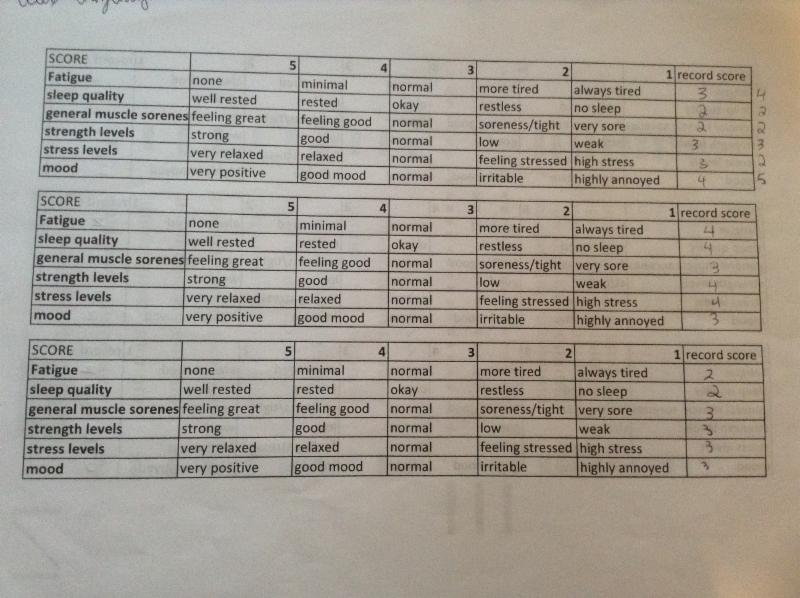
Daily questionnaires (figure 1)
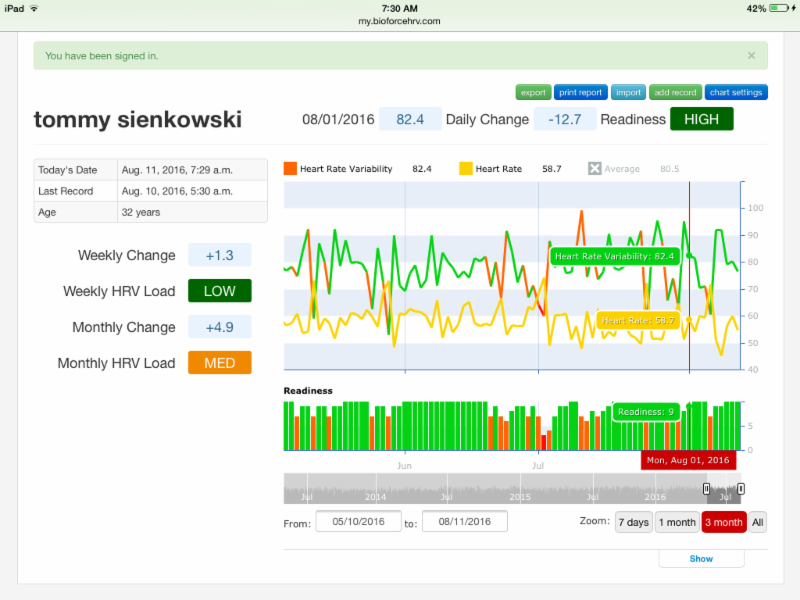
HRV (figure 2)
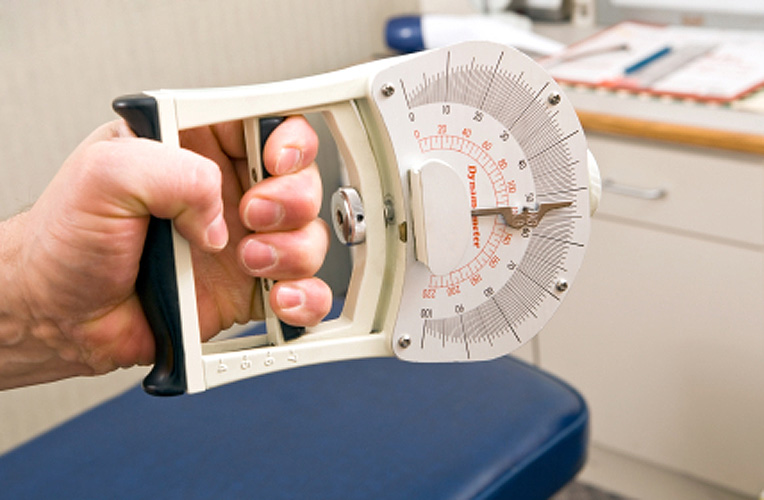
Grip test (figure 3)
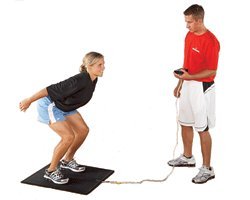
Jump test (figure 4)
Personally, I have the best experience with HRV and questionnaires.
I have been using Bioforce’s HRV device for 3 1/2 years now, taking daily readings. In the image below (figure 2) you can see the spikes and colors that indicate my readiness for
that day. It also shows trends over long periods of time. This has allowed me to make real time training decisions which has reduced my risk of injury drastically along with achieving training adaptation quicker.
The 1st image below is a screenshot of our questionnaires during the off season training program. We noticed that by the end of the 3rd week, right before Christmas break, all of our guys were in need of some rest. Between fighting off colds, accumulating training volume and finishing out the school term, they weren’t in the best training shape. I decided that using lighter weights and putting more focus on recovery for the week before their break would put them in the best position to come back after and get back to training hard. It did, and we saw a much more alert and eager to train athlete return.
Training isn’t meant to just bury you in fatigue and muscle soreness. You want to feel stronger, faster and healthier after a training cycle. Too much can cause overuse injuries or even make you sick. On the flip side knowing when to go hard allows you to get the most out of your training as well. Using data, analytics and other tools to help gain insight into how your body responds to the stress you apply to it, can have a huge impact on your training. It can be the next step in progressing one’s training to higher levels by streamlining the process.
 TS Training Systems
1 thought on “Readiness”